
Working group leader:
Christian Polley M.Sc.
Justus-von-Liebig Weg 6
18059 Rostock
Tel.: +49 381 / 498 - 9113
Fax: +49 381 / 498 - 9092
Email: christian.polley(at)uni-rostock.de
Room: UT17


Biomaterials Engineering and Biofabrication
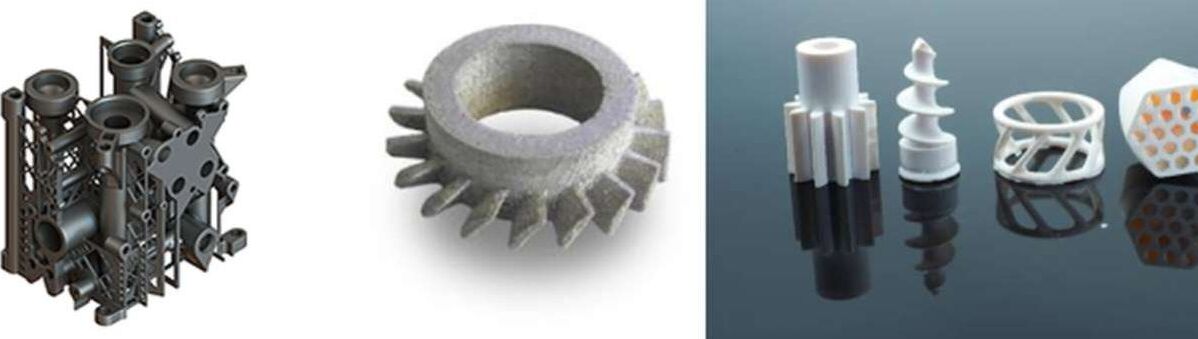
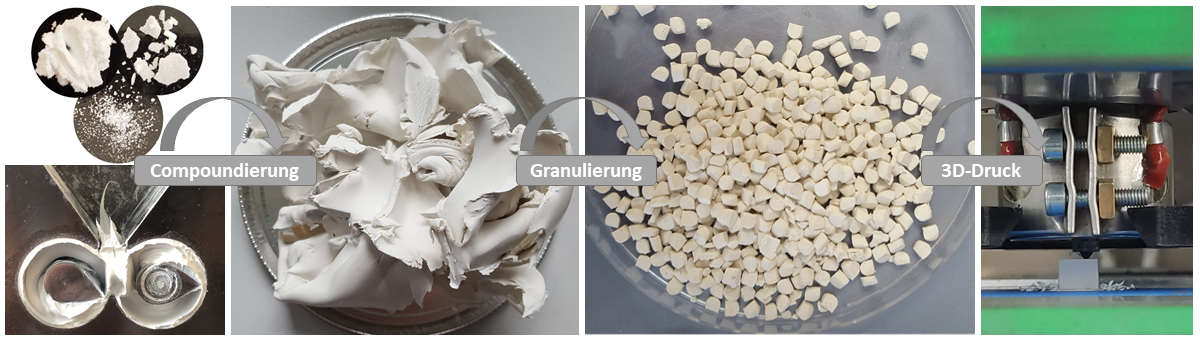
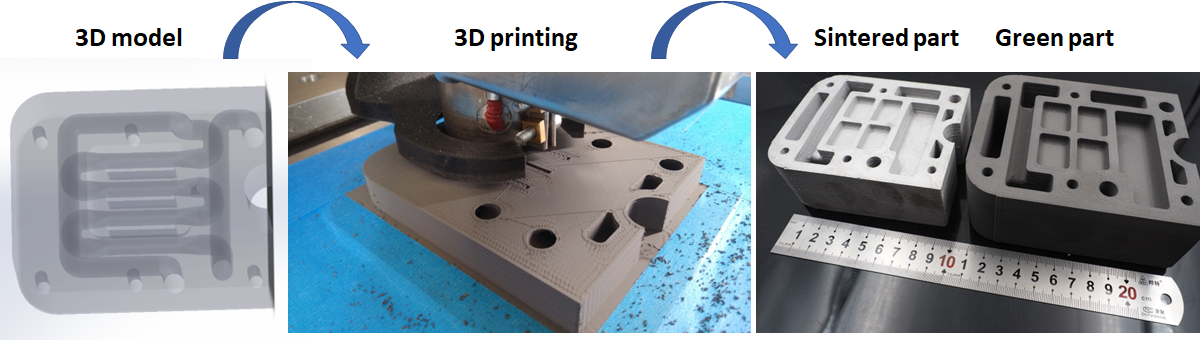
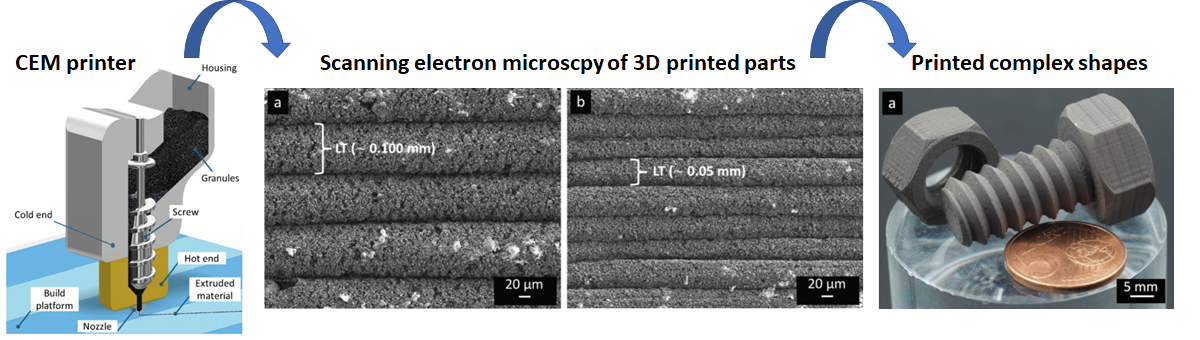
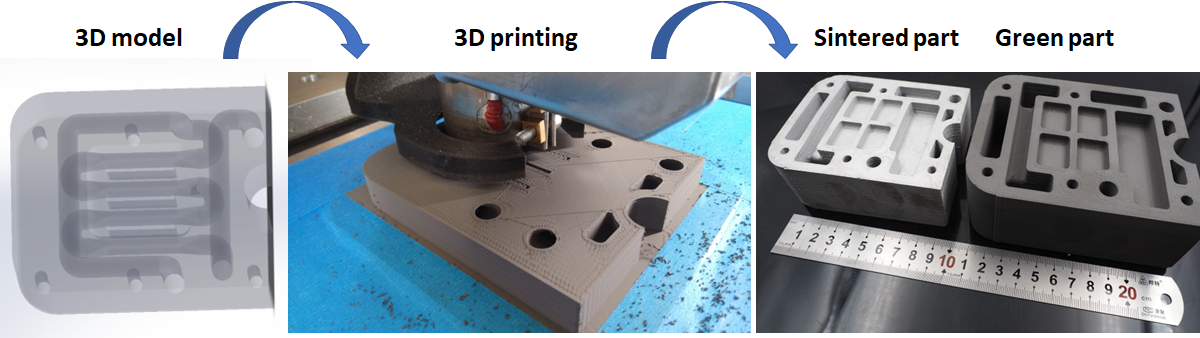
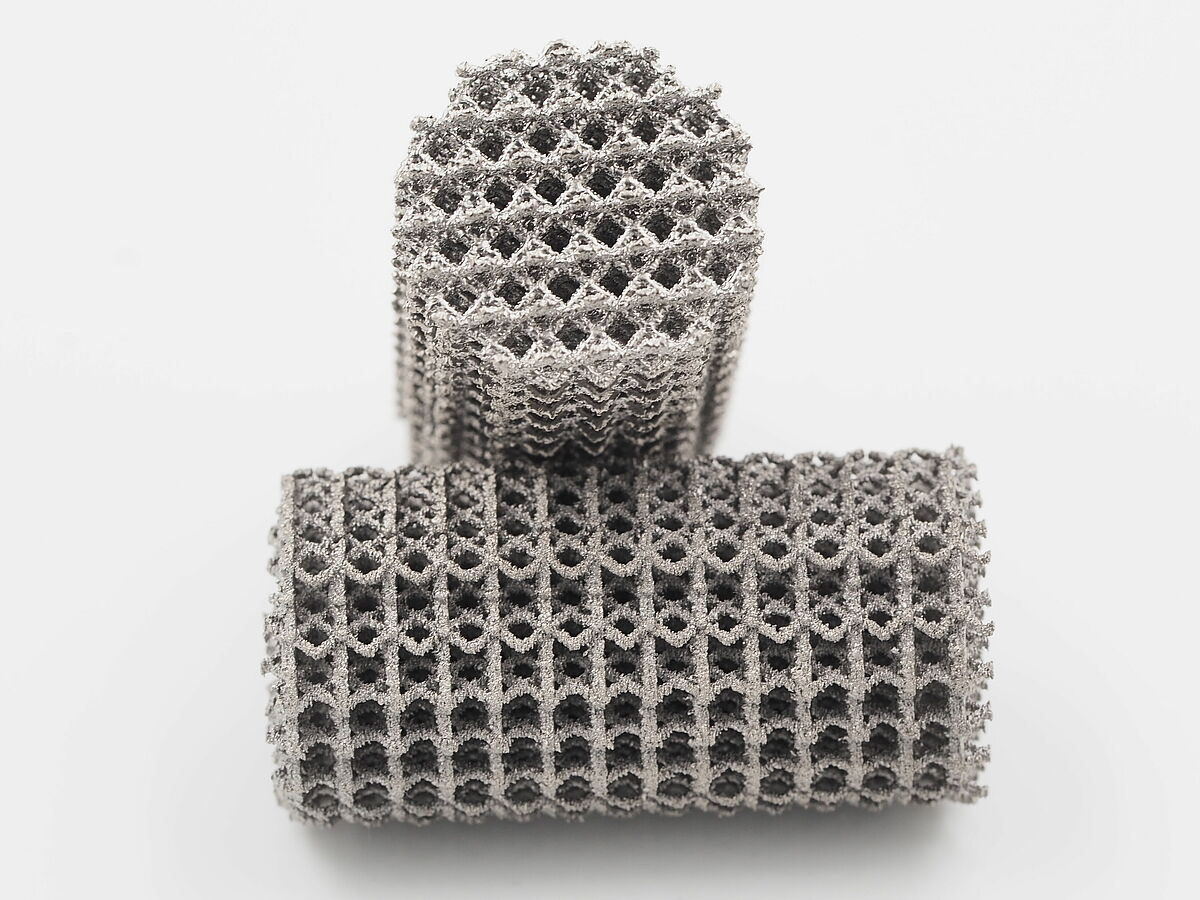
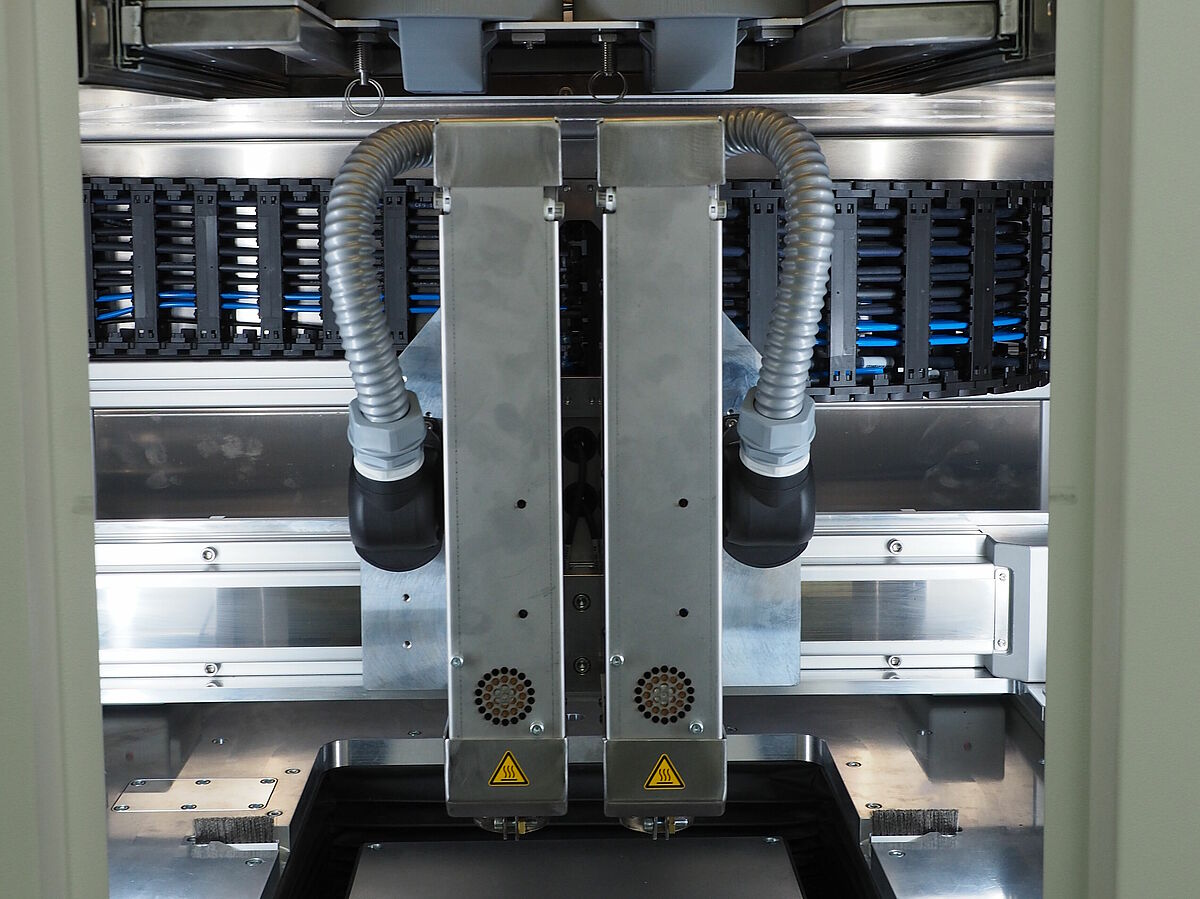
Additive manufacturing enables the production of components from pure polymers, metals or ceramics. Different additive manufacturing processes are used depending on the requirements of the component and material. Each process requires a specially prepared material, which is either ordered or produced in-house. For example, powder bed-based 3D printers require a powder with a defined particle shape and particle size distribution. Additive manufacturing processes based on the photopolymerization principle require a photopolymer with a specific viscosity and defined curing kinetics over time with low scattering. It can be seen that, depending on the process, various material parameters must be adapted to the process in order to obtain a print product that is as accurate and stable as possible.
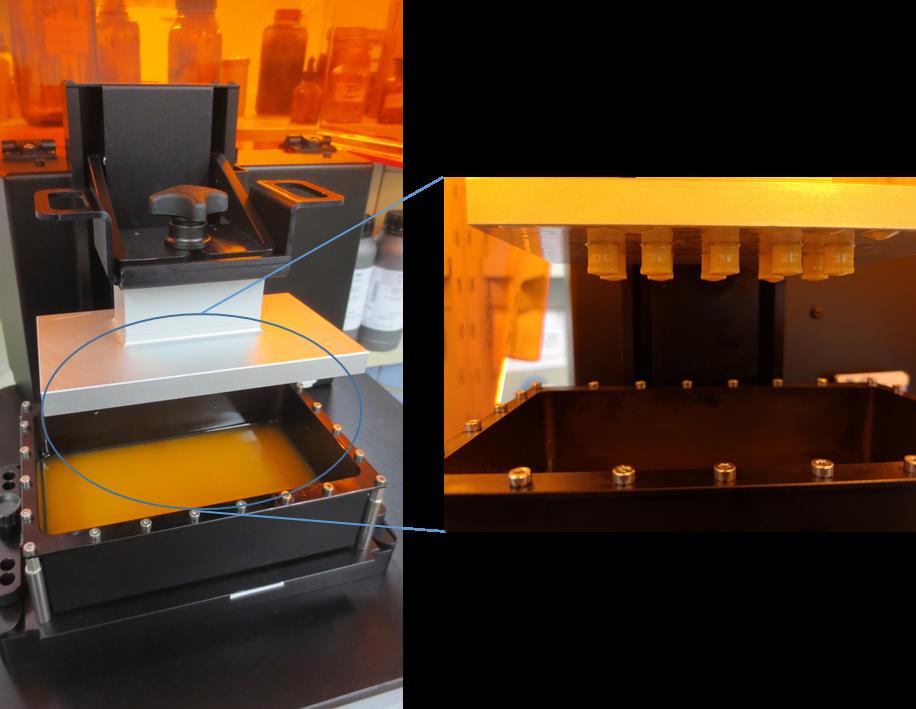
The chair of microfluidics develops its own material systems for various 3D printers. A wide range of processing and analysis equipment is available to staff and students for this purpose. If powders are to be ground and analyzed, the ball mill can be used to reduce the particle size and the particle analyzer can be used to determine the particle shape and size. The rotational rheometer and the UV module can be used to analyse and develop photopolymerizing liquids and suspensions. Glass rotation plates are available for this purpose, which are illuminated from below by a light source with a defined wavelength and intensity, thus stimulating the photopolymer to react. The reaction kinetics are recorded with the aid of an oscillating movement of the two rotation plates.
Current research projects
Development of a Material System and 3D Printing Process for Magnesium-Reinforced Zirconia Ceramics for Dental Applications
The ZIM project focuses on the development of high-resolution two-part dental implants made of magnesium oxide-stabilized zirconia (MgO-ZrO2) using lithography-based ceramic manufacturing (LCM).
The technology enables the fabrication of dense, high-strength ceramic components with complex geometries and high resolution.
A screwless connection between the implant body and abutment is designed to prevent screw loosening, while the high fracture toughness of MgO-ZrO2 is expected to improve implant stability and durability.
The project includes the development of suitable ceramic slurries, optimization of the LCM process, and subsequent thermal treatment to achieve high-resolution and mechanically reliable implant structures.
Researcher: Yasamin Pesaran Afsharian, M.Sc
Project duration: 01/2026-06/2028
Funded by: Federal Ministry for Economic Affairs and Energy (BMWE)
Partner: Dentallabor Moss GmbH, Hamburg
Piezoelectric materials for multifunctional bone and cartilage implants
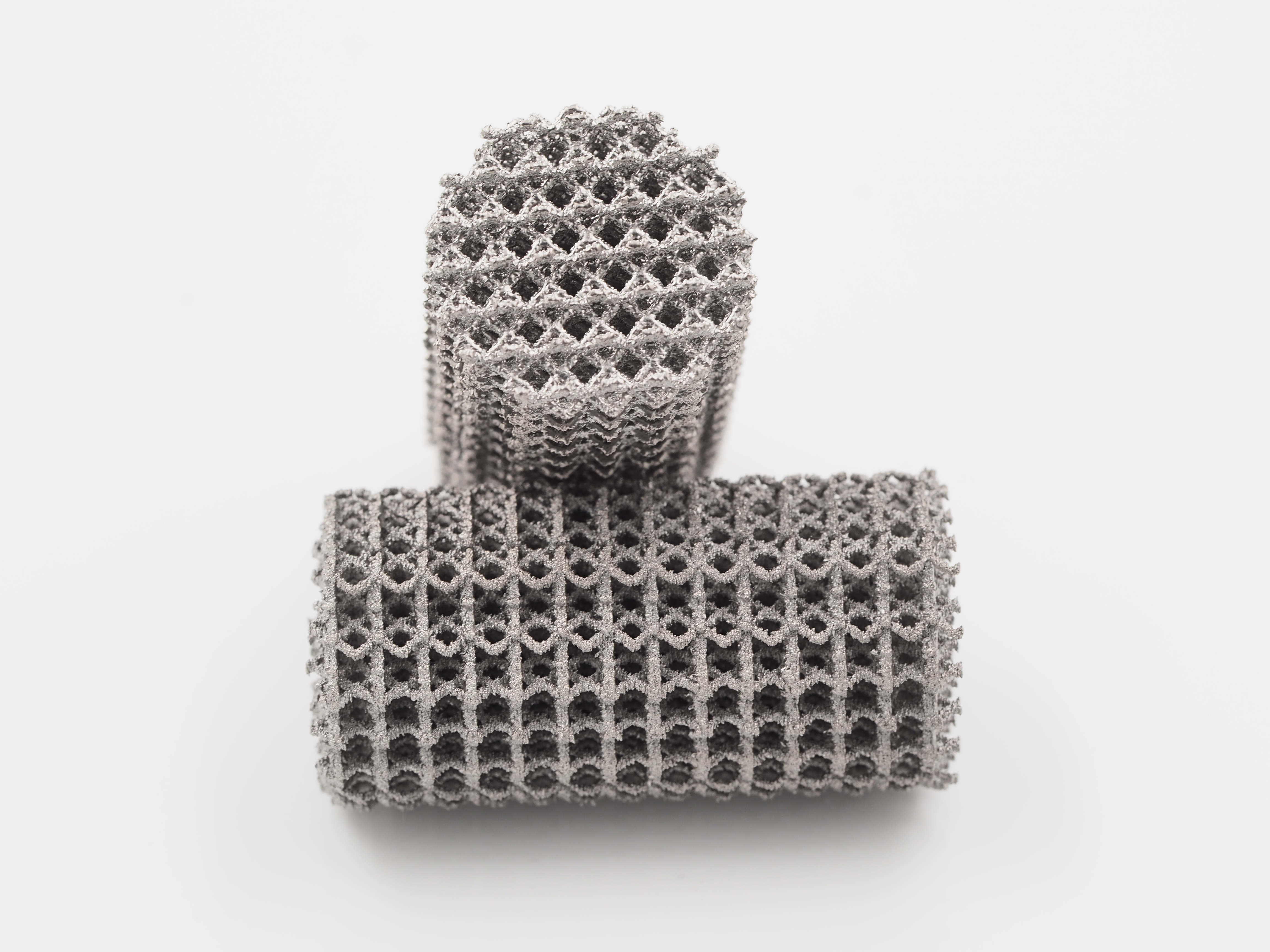
The investigations in this sub-project (B01) of the SFB Elaine focus on the production of electrically active implants for bone and cartilage regeneration using additive manufacturing technology. The implants for bone replacement are manufactured using special processes for the various applications. For the load-bearing area, e.g. hip endoprostheses, implants made of a biocompatible titanium alloy are intended, which carry specific structures for improved mechanical behavior and bone ingrowth. In addition, the implants are coated with a novel conductive polymer with incorporated Bioglass© particles in order to increase the electrical activity at the implant-bone interface. Implants made of barium titanate and Bioglass© are being developed for the non-load-bearing area. These are intended to promote natural bone growth by utilizing the piezoelectric effect and thus improve the ingrowth of the implants. For cartilage regeneration, novel hydrogel scaffolds incorporated with electrically conductive polymer are additively manufactured and seeded with cells. This process step is carried out by the close cooperation partner, the Chair of Biomaterials at the Friedrich-Alexander University Erlangen-Nuremberg. In addition, the working group from Erlangen brings considerable expertise in handling Bioglass© particles to the project. The scaffolds produced in B01 form the basis for the work of other working groups within the ELAINE research network.
Person in Charge:Phillip Barkow, M.Sc
Project duration: 07/2017 - 12/2025
Please note: Once you watch the video, data will be transmitted to Youtube/Google. For more information, see Google Privacy.
Funded by:

in cooperation with:
Universität Rostock: IEF, MSF, UMR
EMAU Greifswald
Universität Leipzig
Universität Nürnberg-Erlangen
Leibniz-Institut für Plasmaforschung und Techologie e.V.
Electrical and mechanical stimulation of cartilage
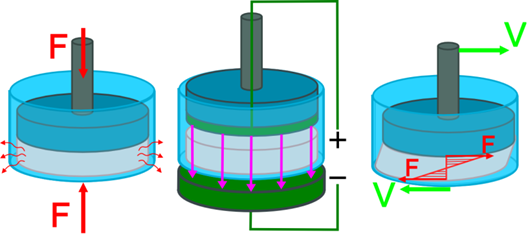
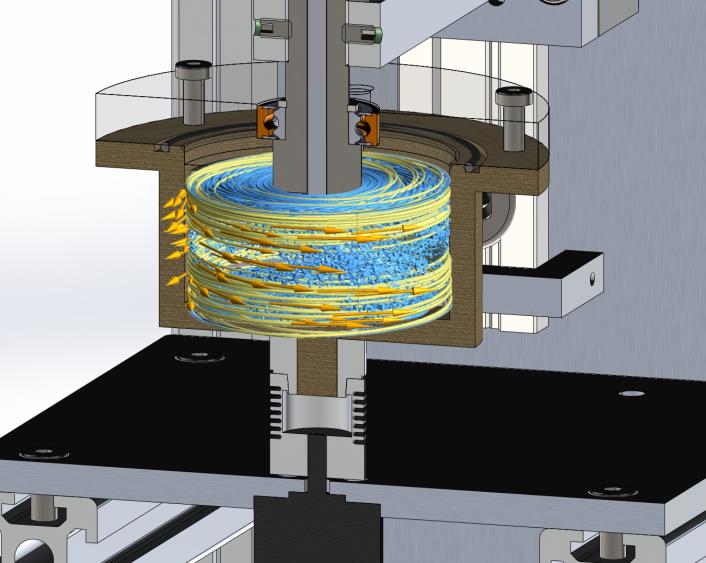
The aim of subproject C02 of the SFB ELAINE is to investigate the influence of electrical stimulation on the chondrogenic differentiation of human cartilage cells and mesenchymal stem cells. This subproject is being carried out in collaboration with the Research Laboratory for Biomechanics and Implant Technology at Rostock University Medical Center. The scaffolds developed on the basis of subproject B01 (working group of Prof. Dr.-Ing. Hermann Seitz) are analyzed for their rheological and tribological properties and compared to native human tissue.
Furthermore, the prototype of an electrode for the electrical stimulation of human cartilage cells and mesenchymal stem cells from the second funding period is being adapted for the use in humans. The generation of an electric field is intended to mimic the biophysical stimulation of chondrocytes and thus induce chondrogenic differentiation. The stimulation device will be applied specifically to the articular cartilage using a software-defined implantable platform STELLA+ (subproject B03, working group of Prof. Dirk Timmermann). The stimulation device will be implanted together with a biphasic osteochondral scaffold (from B01) in a human ex vivo model to investigate the distribution of the electric field. In addition, validation studies on the electric field will be carried out in collaboration with subprojects A02 (working group of Prof. Dr.-Ing. Simon Adrian) and S01 (working group of Prof. Dr. rer. nat. habil. Ursula van Rienen).
Person in charge:Carla Maximiliane Niendorf, M.Sc
Project duration: 07/2017 - 06/2029
Please note: Once you watch the video, data will be transmitted to Youtube/Google. For more information, see Google Privacy.
funded by:
Partners:
Universität Rostock: IEF, MSF, UMR
EMAU Greifswald
Universität Leipzig
Universität Nürnberg-Erlangen
Leibniz-Institut für Plasmaforschung und Techologie e.V.
Completed research projects
The project aims to develop an additively manufactured jaw implant with a time-controllable release of active ingredients to support the healing process and osteogenesis of the jaw bone.
The implant will be manufactured using a hybrid 3D printing process. A corresponding active ingredient is introduced into the polymer implant to support the healing of the implant and the bone formation. This is incorporated into special active ingredient depots in the implant during the printing process and then released in the tissue by diffusion over a controlled period of time.
In cooperation with the project partners, the model of a jaw implant will be created and printed with novel photopolymers and provided with the active ingredient depots in an appropriately defined size and position. For this purpose, a combined microstereolithography facility will be set up accordingly.
The polymer implant described is intended to greatly reduce the side effects of conventional jaw implants made of titanium. To achieve this, mechanical properties that are as similar as possible to the natural jaw bone are sought. Osteosynthesis is to be promoted by appropriate surface design and the targeted release of the incorporated active ingredient.
Person in charge: Ahmed Sannan M.Sc.
Funded by: Bundesministerium für Wirtschaft und Energie (BMWi)
Project duration: 09/2021 – 02/2024
Partners:
- M.C. Medizintechnik-Export GmbH & Co. KG,
- MEGADENTA Dentalprodukte GmbH,
- Institut für Biomedizinische Technik der Universitätsmedizin Rostock
ZUKUNFT - Cell carriers to support cultured, new meat technology ‘Development of economically and ecologically sustainable cell carriers for cell-based meat products’
In the cooperation project, Innocent Meat GmbH, in partnership with the Chair of Microfluidics, is developing an elementary building block on the way to sustainable, industrially produced, cell-based meat products for the bioeconomy.
Scaffolds, also known as cell carriers or microcarriers, are artificially created scaffold-like structures on which adherent cells can be cultivated in vitro. In order to be able to develop a scalable process at a later stage, the cells must be able to be used in fully automated bioprocesses. This requires scaffolds that provide sufficient surface area for the production of large cell masses and can be used in bioreactor systems. The scaffolds must also be made of a material that can be safely consumed by the consumer.
The project is investigating different processes and materials for the production of cost-efficient, scalable and biodegradable scaffolds and evaluating them for ongoing development in the bioeconomy. The aim is to produce two functional samples of scaffolds using cryogelation and electrospinning.
Researcher: Tim Dreier M.Sc.
Project duration: 09/2022 - 08/2024
Funded by: Federal Ministry of Education and Research (BMBF)
Collaborative partner: Innocent Meat GmbH
The aim of the research project is to develop drug delivery systems (DDS) with time-controlled drug release. These are intended to enable implant-based, local administration of active ingredients and combinations of active ingredients with specific predefined release mechanisms. For the production of these DDS, a new 3D printing process is required, which will result from the combination of microstereolithography and inkjet technology. This process will be used to create the basic body of an implant via stereolithographic crosslinking and, in the same process, drug loading via inkjet modules. The resulting drug depots will enable controlled and predictable drug release, as properties such as drug concentration can be adjusted during the process.
Person in charge: M.Sc. Jan Konasch
Project duration: 01.09.2017 - 31.08.2019
RESPONSE: 3D printing of functionalized (bio)materials
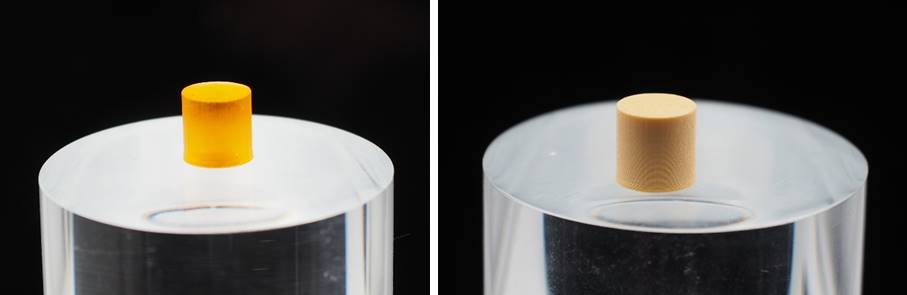
In the research network "RESPONSE - Partnership for Innovation in Implant Technology", the Chair of Microfluidics is working on the development of individualized implants for ear, nose and throat medicine* as well as on the process and material development of functionalized (smart) (bio)materials for the different 3D printing technologies Composite Extrusion Modeling (CEM) and Digital Light Processing (DLP). In the case of the CEM process, the processing of biodegradable metal matrix composites (BMMC) is to be investigated. In collaboration with the Chair of Materials Engineering at the University of Rostock, the focus is on the material properties resulting from the interaction of metallic and polymeric materials, such as an adjustment of the degradation properties or the degree of crystallinity of the polymer. In the application of the DLP process, the focus is on particle-loaded and stimuliresponsive polymers. For example, it is being investigated how the electrostimulative behavior of photopolymers, e.g. piezoelectric properties, can be influenced by the introduction of ceramic particles (Figures 1 and 2). Furthermore, it is planned to process thermoresponsive materials in the process in which thermal stimulation is suitable for influencing the release of active ingredients.
Funded by: Federal Ministry of Education and Research (BMBF) as part of the "Twenty20 - Partnership for Innovation" program
Person in charge: Dipl.-Ing. Robert Mau
Partners: RESPONSE – Partnerschaft für Innovation in der Implantattechnologie

Development of an inkjet technology for selective glass solder coating of dental implants
The aim here is to develop implants that not only have a long service life, but also heal well in the bone, cause few complications and, if possible, can also be used in difficult conditions. Optimization can and will be achieved in the future primarily by modifying the surface of dental implants. However, current implant surfaces have a geometrically non-directional surface according to the random principle of structuring, which is produced by sandblasting, etching and/or coating. To date, hybrid implants have been coated manually or semi-automatically using airbrush processes. A new process based on inkjet technology is to be developed to selectively coat an existing component with a newly developed glass solder suspension..
Person in charge: Sebastian Eilek M.Sc.; Pedram Azizi M.Sc.
Project duration: 01/2019 - 12/2021
Funded by: Bundesministerium für Wirtschaft und Energie (BMWi)
Partners: Dentallabor Moss GmbH; Universitätsklinikum Hamburg-Eppendorf